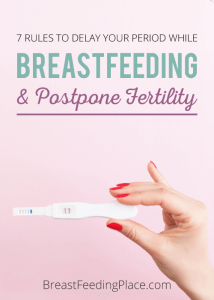
After delivering your little bundle of joy, you may begin to wonder when you will be fertile again. Some women don’t get their period back for a while, and others seem to resume their period like clockwork shortly after baby is born. What causes a delay in resuming your period while breastfeeding? Why do some women become fertile very soon after delivering a child while others can’t get pregnant for a months? In talking about fertility and breastfeeding, it seems that there are two major schools of thought, neither of which is fully accurate. Many women believe that any amount of breastfeeding prevents pregnancy, and are surprised to … [Read more...]
Please Note: This post may contain sponsor, affiliate, and/or referral links. Read my full disclosure statement.
Disclaimer: The information in this post is for educational purposes only. I am not a doctor. It is not intended to be a substitute for professional medical advice. None of the opinions are meant to diagnose or treat any disease or illness. You should always consult your healthcare provider.

Rachel Wideman lives with her husband Andrew. They have a 6-year-old son and a 1-year-old daughter. She is a registered nurse and enjoys knitting and reading.
Baby Moon: Caring for Yourself After Birth
By 1 Comment

Our American culture is definitely not one which is friendly to postpartum mothers. After birth, mothers need lots of time to rest, sleep, cuddle and nurse their new babies, and just generally rest from the work of giving birth. Particularly if the birth was via cesarean, rest is vital to the healing process! We sometimes expect new mothers to be up running errands within a day or two of giving birth or leaving the hospital. But the risks of getting "up and around" too quickly are very costly, and this is the perfect time to snuggle up with your baby and get to know him or her! Inadequate rest after birth has been linked with the … [Read more...]
6 Ideas for Helping a Postpartum Mom

During pregnancy, mothers frequently hear offers of help after the baby comes. Sentiments like "Call me if you need anything!" are frequently heard. While the people who say this generally have the best of intentions, it is sometimes difficult for mothers to ask for help after they've had a baby. Often, "help" looks like someone coming over to hold the baby (the fun, easy part!) while the freshly postpartum mother cleans the house and does the laundry! Our society has a very strong mindset of "do it yourself," and mothers may not feel comfortable asking for help. Even if they do feel comfortable asking, they may not even know what they … [Read more...]
Myth Busters: Does Frequent Nursing Mean Baby isn’t Getting Enough?

It seems like when a woman has a new baby, she is suddenly presented with an onslaught of people who want to be helpful by offering their advice! The problem is that not all of their input is very educated! It doesn't matter if it's a friend who is trying to be helpful, her mother or mother-in-law, or Great Aunt Sue. One of the most frequent things a new mom hears when putting her baby to breast is, "Again?! He just ate a half hour ago! Your frequent nursing must mean you don't have enough milk." When pregnant moms picture caring for their infants, they often picture the baby waking up to nurse every three to four hours, and dozing off … [Read more...]
Myth Busters: Dad and Grandma Can’t Bond with Baby Unless You Use Bottles
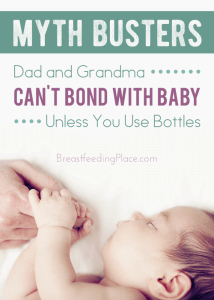
Feeding a baby is a very bonding experience. Whether a baby is fed by breast or bottle, feeding involves closeness, touching, and eye contact. Because of these benefits, many parents worry that exclusively breastfed babies won't be adequately bonded to caregivers in their life other than their mothers. Fortunately this need not be a concern! Fathers, grandmothers, and other caregivers involved in baby's life can bond beautifully with the baby, despite not giving bottles. So without further ado, here are some ideas to help others bond with baby without feeding! Ways for Others to Bond with Baby Diaper duty! Though it is probably the … [Read more...]
Is My Baby Allergic to My Breast Milk?

With the incidence of food allergies (and the knowledge of such!) on the rise in recent years, it is understandable that moms would be concerned about the possibility of babies being allergic to their breastmilk. Fortunately, this is very rarely the case! A true inability to digest the galactose in breastmilk is called galactosemia. Galactosemia is a genetic mutation that affects the body's ability to convert galactose into glucose, and causes the galactose to build up in the blood. Most cases are diagnosed through the newborn screen completed 24-48 hours post-birth (the "heel prick test"). Galactosemia, in the western world, occurs in … [Read more...]
Signs of Weaning: How to Know It’s Coming
How will you know if your baby is truly weaning, or if it's a simple (yet incredibly frustrating!) nursing strike? There are several signs of weaning which can help you know the difference. Signs of Weaning Weaning happens over the course of months. Weaning from the breast is a very gradual process of a baby slowly cutting back on the number of nursing sessions and duration of each session. If the baby is suddenly refusing the breast, this could be for any number of reasons, including teething, illness, pain, or emotional stress. This is known as a nursing strike, and usually continues for several days, but does not indicate weaning. … [Read more...]
Breast Milk Storage Guidelines
By 1 Comment
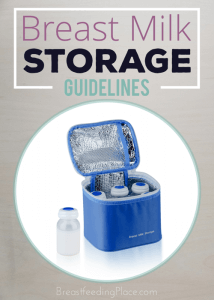
Whether you're preparing to return to work or just want to freeze enough milk for emergencies, the idea of pumping and storing your breastmilk can be a bit daunting. How long can I leave breastmilk in the freezer? Is it okay to leave milk in a bottle from one feeding to the next? These simple breast milk storage guidelines can help reduce the stress of needing to express and store your breast milk! Breast Milk Storage Guidelines Room temperature. After expressing your breastmilk, it can safely be left at room temperature for four to six hours. If the room is very warm, it is ideal not to leave your milk out longer than two to three … [Read more...]
5 Tips for Breastfeeding After a C-Section
Breastfeeding after a c-section can present many challenges. Particularly if you were not planning to deliver by c-section, plans may not have been in place as to how to implement nursing under these changed circumstances. With a little help and the right support, you'll be off to a great start for breastfeeding after a c-section! Breastfeeding After a C-Section: 5 Tips 1. Arrange for skin-to-skin as soon as possible. This is an important subject to broach with your obstetrician or midwife during the course of your pregnancy, since even women who are planning for vaginal deliveries can wind up delivering via cesarean. Many hospitals … [Read more...]
10 Tips to Keep Your Baby from Weaning at 6 Months
By 2 Comments

It's extremely common to hear mothers say that their infants self-weaned between six to eight months of age. With developmental milestones, teething, and just generally getting more involved in the world around them, babies are easily distracted from nursing. Fortunately there is no need for this to signal an end to the breastfeeding relationship. In no particular order, here are some tips that have been very helpful to other moms who have kept their baby from weaning at 6 months. 1. Start with a calm baby. Babies who are being forced to the breast will usually resist, which can lead to further breast refusal. 2. Take the baby into a dark, … [Read more...]